
.png)
Hajj 2026 Successfully Concluded; Pakistan Receives Global Labbaik Excellence Award for the Second Consecutive Year
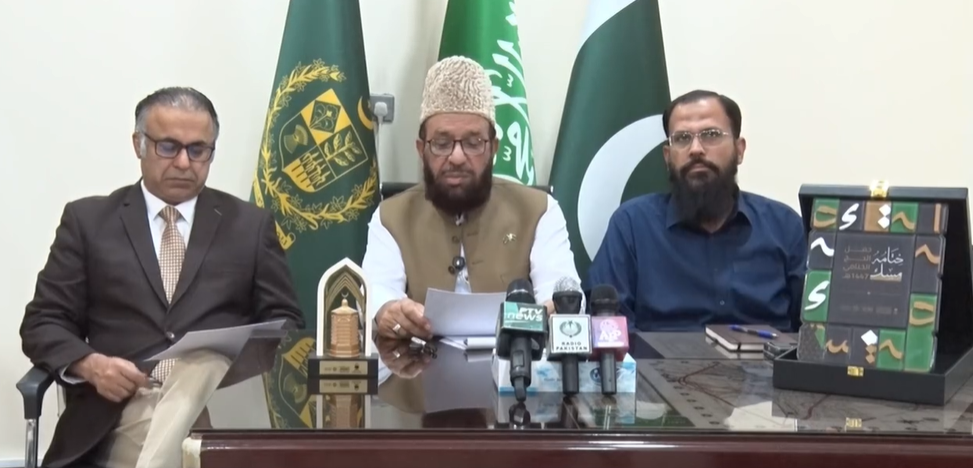
Makkah Mukarramah: Federal Minister for Religious Affairs, Sardar Muhammad Yousaf, announced the successful completion of Hajj 2026 and revealed that Pakistan has received the prestigious international “Labbaik Excellence Award” for the second consecutive year. He also stated that Pakistan’s private Hajj sector received three international awards for outstanding performance. The Minister highlighted that due to excellent arrangements made for pilgrims, the complaint ratio remained below one percent this year. Furthermore, approximately 80 percent of Pakistani pilgrims benefited from the Road to Makkah Project. Speaking at a Post-Hajj Press Conference at the Pakistan Hajj Mission in Makkah on Sunday, Sardar Muhammad Yousaf stated that under the new Saudi Hajj timeline, Pakistan’s Hajj Policy 2027 will be presented to the Federal Cabinet in June. The policy will continue to follow the “First Come, First Served” principle, and Hajj 2027 bookings are expected to be completed within the next two months. He urged intending pilgrims to obtain their passports as soon as possible. The Minister emphasized that Hajj is a collective national responsibility and should not be used for political purposes or point-scoring. Also present at the press conference were Director General Pakistan Hajj Mission Abdul Wahab Soomro, Chief Coordinator Mirza Ali Mehsud, and Director Hajj Makkah Muhammad Arif Aslam Rao. Sardar Muhammad Yousaf stated that, by the grace of Allah, Hajj 2026 was completed successfully, and Pakistani pilgrims performed their religious obligations safely and comfortably. He attributed this achievement to the coordinated efforts of the Government of Pakistan, the Ministry of Religious Affairs, the Pakistan Hajj Mission, and the Saudi authorities. He noted that special directives from Prime Minister Muhammad Shehbaz Sharif ensured that pilgrims were provided with the best possible facilities. The performance of the Pakistan Hajj Mission was also recognized at an international forum chaired by the Saudi Minister of Hajj, where Pakistan was awarded the Labbaik Excellence Award for the second consecutive year—an achievement that is a matter of pride for the entire nation. With a Hajj quota of approximately 180,000 pilgrims, Pakistan ranks as the second-largest Hajj-participating country in the world. The Minister added that Pakistan’s private Hajj sector also received three awards for exceptional performance this year. He further explained that the excellent arrangements for accommodation, transportation, and food contributed to the complaint ratio remaining below one percent. The expansion of the Road to Makkah Project to Lahore enabled nearly 80 percent of pilgrims to benefit from the facility during Hajj 2026. In Madinah, pilgrims were provided with quality accommodations ranging from five-star to one-star hotels in the central area close to Masjid-e-Nabawi. The Minister also appreciated the efforts of the Pakistan Hajj Medical Mission and the Saudi German Hospital, which jointly facilitated 146 critically ill and elderly pilgrims in performing key Hajj rituals, including Wuquf-e-Arafat and Tawaf-e-Ziarah. Addressing the issue of misinformation, the Minister described fake news and disinformation as major challenges. He noted that, despite attempts to spread misleading information on social media during Hajj 2026, mainstream media played a responsible role by presenting facts to the public. He reiterated that Hajj is a shared responsibility and should not become an occasion for politics or point-scoring, as all stakeholders are working with the sole objective of serving pilgrims. The Minister expressed heartfelt gratitude to the Saudi leadership, including Custodian of the Two Holy Mosques King Salman bin Abdulaziz, Crown Prince Mohammed bin Salman, Saudi Minister of Hajj Dr. Tawfiq bin Fawzan Al-Rabiah, and Saudi Ambassador Nawaf Saeed Al-Malki for their continued support and cooperation. Regarding Hajj 2027, he informed the media that the Saudi Ministry of Hajj has already announced the policy framework and timelines for Hajj 1448H (2027), and preparations for the new season have officially commenced. According to Saudi deadlines, Pakistan’s Hajj Policy 2027 will be presented to the Federal Cabinet in June. The policy will define application procedures, packages, and operational arrangements. The “First Come, First Served” policy will remain in effect next year as well. He expressed confidence that Hajj 2027 bookings could be completed within the next two months and advised intending pilgrims to ensure that their passports are ready without delay. He also assured that Pakistan would strive to complete all bookings in the Holy Sites within the prescribed timelines. Responding to a question, the Minister stated that lessons learned from Hajj 2026 would be used to further improve arrangements for Hajj 2027. Although a pilot project for train travel between Madinah and Makkah could not be launched this year, efforts would continue to implement it in the upcoming season. He also assured that accommodations close to Masjid-e-Nabawi would continue to be prioritized and that the private sector would be given a more active role in future Hajj operations. Discussing future initiatives, Sardar Muhammad Yousaf said that greater emphasis would be placed on medical fitness and health screening of pilgrims to ensure that only medically fit individuals undertake the pilgrimage. Additionally, group leaders (Nazimeen) will be selected well in advance and involved throughout the training process so they can better guide pilgrims and effectively manage Hajj-related affairs. The scope of Hajj training programs will also be expanded from Haji Camps to the divisional level, making it easier for pilgrims across the country to receive proper training and guidance.
Hajj 2027 Policy to be Announced in June; Bookings Expected to Be Completed Within Two Months, Says Sardar Muhammad YousafHajj is a Sacred Religious Obligation and Should Not Be Subject to Politics or Point-Scoring, Says Federal Minister for Religious Affairs During Post-Hajj Press Conference